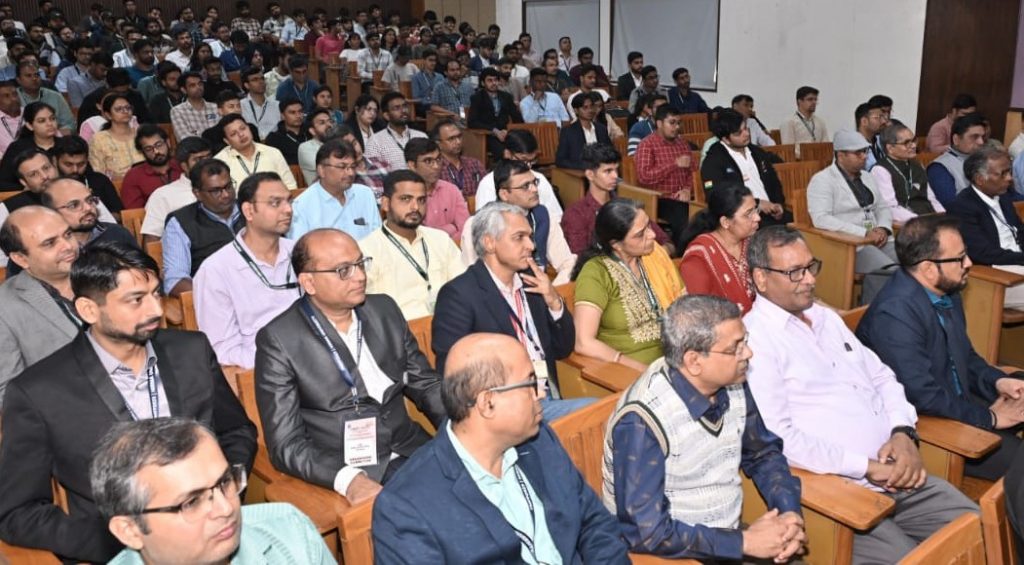
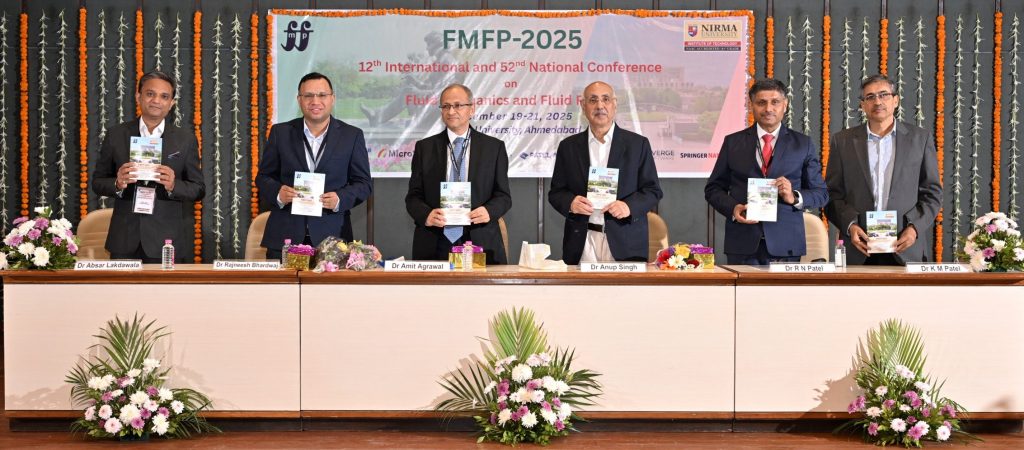
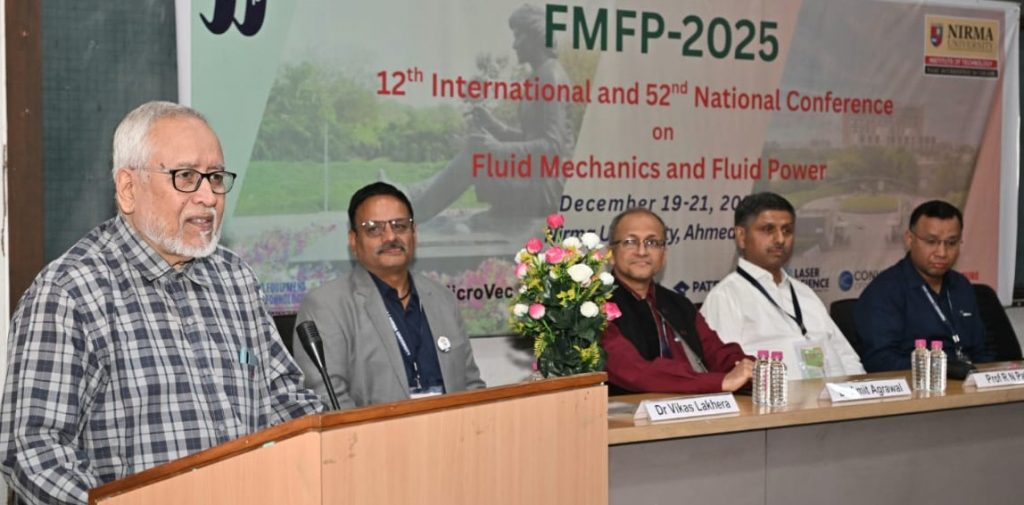
The Department of Mechanical Engineering at the School of Engineering, Nirma University, successfully hosted the 12th International and 52nd National Conference on Fluid Mechanics and Fluid Power (FMFP-2025) from December 19 to 21, 2025. This prestigious event marked a significant milestone for the University, as it is a conference traditionally hosted by premier institutes like the IITs and NITs. The inaugural ceremony was held at the NIM Auditorium and chaired by Dr. Anup Singh, Director General of Nirma University. The dais was graced by esteemed academic leaders including Prof. Amit Agrawal (President, NSFMFP and IITB), Prof. Rajneesh Bhardwaj (Secretary, NSFMFP and IITB), Prof. R. N. Patel (Dean, FoTE), Prof. K. M. Patel (HoD, Mechanical Engineering), and Prof. A. M. Lakdawala (Organizing Secretary, FMFP2025). During the ceremony, the speakers emphasized the critical role of fluid mechanics in addressing daunting humanitarian challenges and urged researchers to adapt to the rapidly shifting global research landscape.
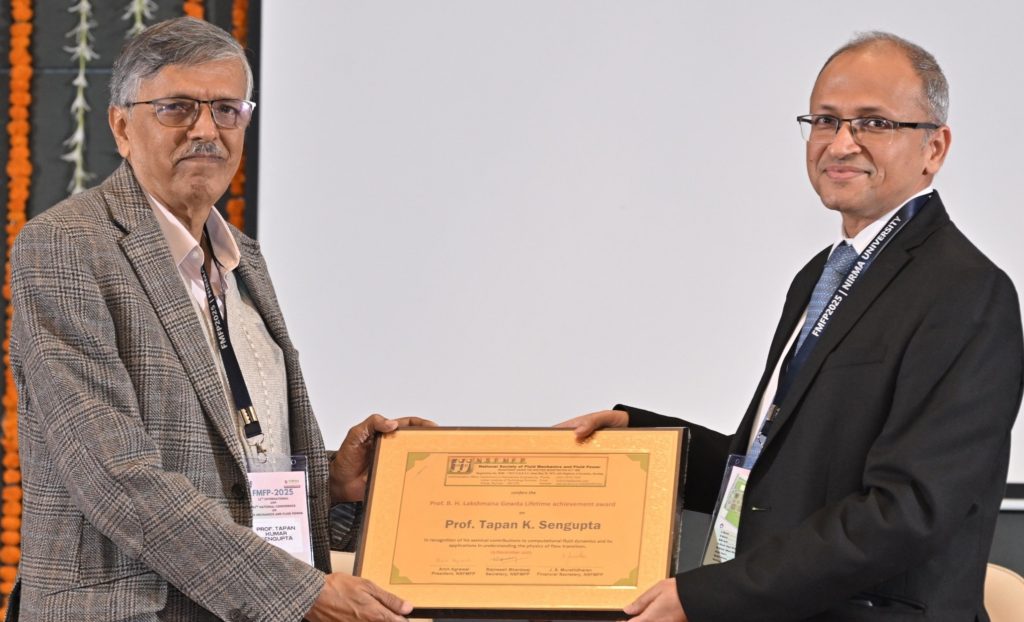
The intellectual journey of the first day began with the bestowing of the Prof. B. H. Lakshmana Gowda Lifetime Achievement Award upon Prof. Tapan Kumar Sengupta, retired Professor from IIT Kanpur, for his legendary contributions to the field. Prof. Sengupta subsequently delivered a plenary address on the effects of precision on the high-performance computing of physical instabilities.
This was followed by the Prof. Subir Kar Plenary Talk by Prof. Sanjay Mittal from IIT Kanpur, who provided deep technical insights into Fluid-Structure Interactions. The day also featured high-impact keynote sessions by Prof. Rochish Thaokar on electrohydrodynamics, Prof. Chandan Bose on bioinspired fluid-structure interaction systems, and Prof. Upendra Bhandarkar on modeling flow chemistry in re-entry flows. Parallel technical sessions allowed for the presentation of numerous research papers across tracks such as Computational Fluid Dynamics (CFD), Fundamental Studies, and Multiphase Flows. The evening was capped off with a vibrant cultural program at the NIM Auditorium.
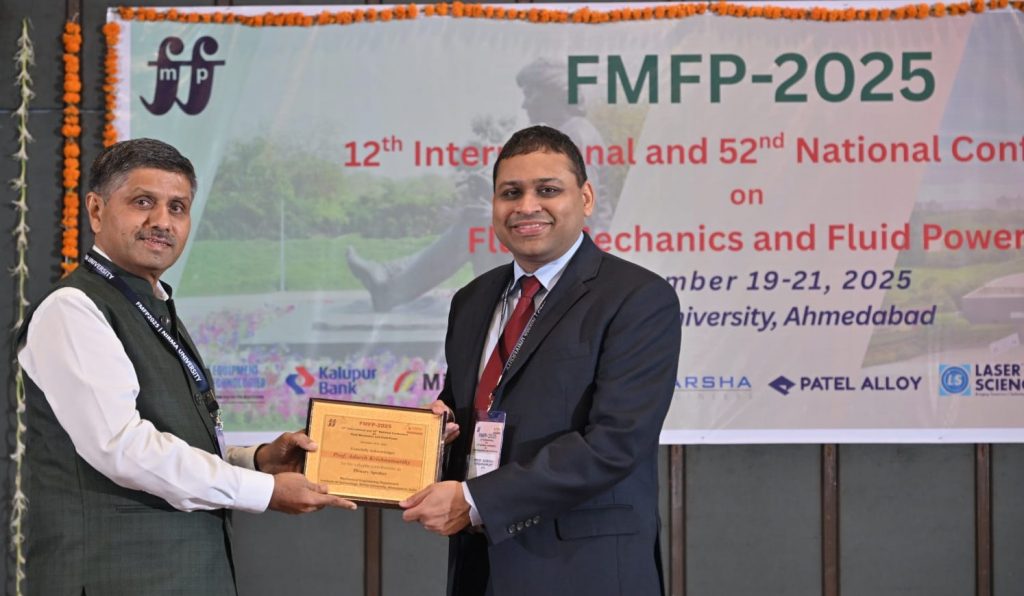
The second day focused on emerging paradigms and specialized engineering solutions, beginning with a plenary talk by Prof. Adarsh Krishnamurthy from Iowa State University, USA, regarding new methods for representing complex geometries in fluid flow simulations. Keynote sessions continued throughout the day with experts such as Prof. Vagesh Narasimhamurthy (IIT Madras), Prof. Marcus Hermann (Arizona State University, USA), and Prof. S. Vengadesan (IIT Madras). Afternoon highlights included presentations by Prof. Ravi Kumar (IIT Roorkee) on blood flow and thermal comfort, Prof. Atul Bhargav (IIT Gandhinagar) on hydrogen fuel cells for UAVs, and Prof. J. Banerjee (SVNIT Surat) on heat sink modeling. The day concluded with the General Body Meeting of the NSFMFP and a Gala Dinner.
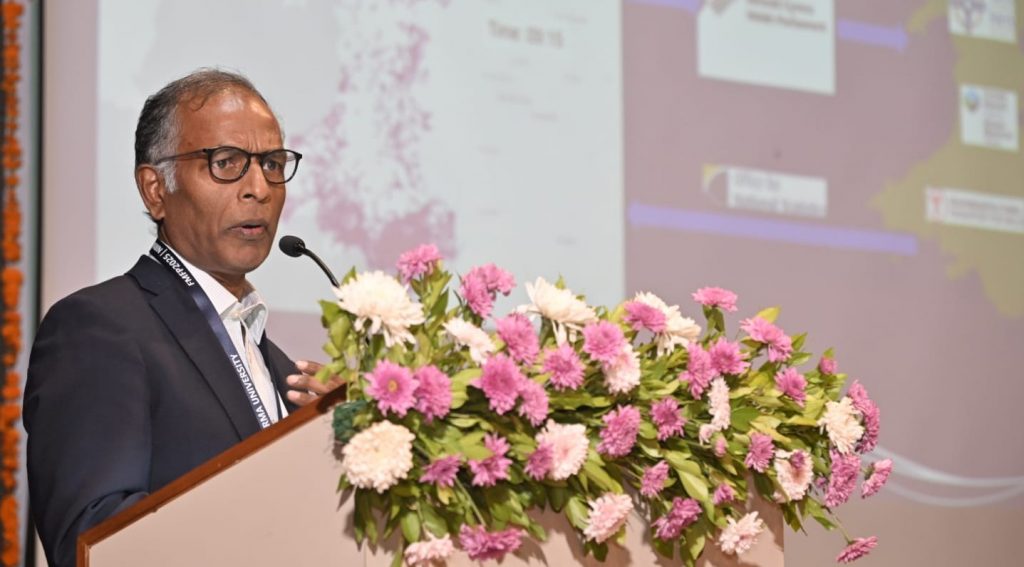
The final day explored the future of digital integration and plasma flows. Prof. Perumal Nithirasu from Swansea University, UK, delivered the Prof. Aswatha Narayana Plenary Talk on the transformative role of Digital Twins in Thermal Systems. Keynote addresses were provided by Dr. Devendra Sharma from the Institute of Plasma Research on plasma flow modeling, Mr. Himanshu Joshi from Eaton Corporation on the decadal evolution of CFD, and Prof. Manmohan Pandey from IIT Guwahati on flow boiling instabilities. The conference concluded with a grand valedictory ceremony where Prof. Kunal Ghosh, Former HoD at IIT Kanpur, was specially facilitated for his immense contributions to aeronautical and fluid engineering. A technical tour of Ahmedabad followed the formal conclusion of the sessions.
The success of FMFP-2025 was a result of the collaborative efforts of the National Society of Fluid Mechanics and Fluid Power (NSFMFP) and the organizing committee at Nirma University. A special mention must be made of the dedicated student volunteers from the Department of Mechanical Engineering, whose tireless work in managing logistics, registration, and hospitality was the backbone of the event. Through three days of intense academic exchange and over 300 paper presentations, the conference successfully provided a global platform for driving innovation in fluid mechanics.